
AïeLEAD Blog Series: Understanding the Learner Behind the Results
By Lara Khneisser, founder of AïeLEAD · SOI Learning Specialist · 6-minute read
Even simple assignments can feel overwhelming when a child is unsure where to start. Understanding the difficulty is the first step towards more confident, independent learning.
Meet Maya and the Unfinished Homework
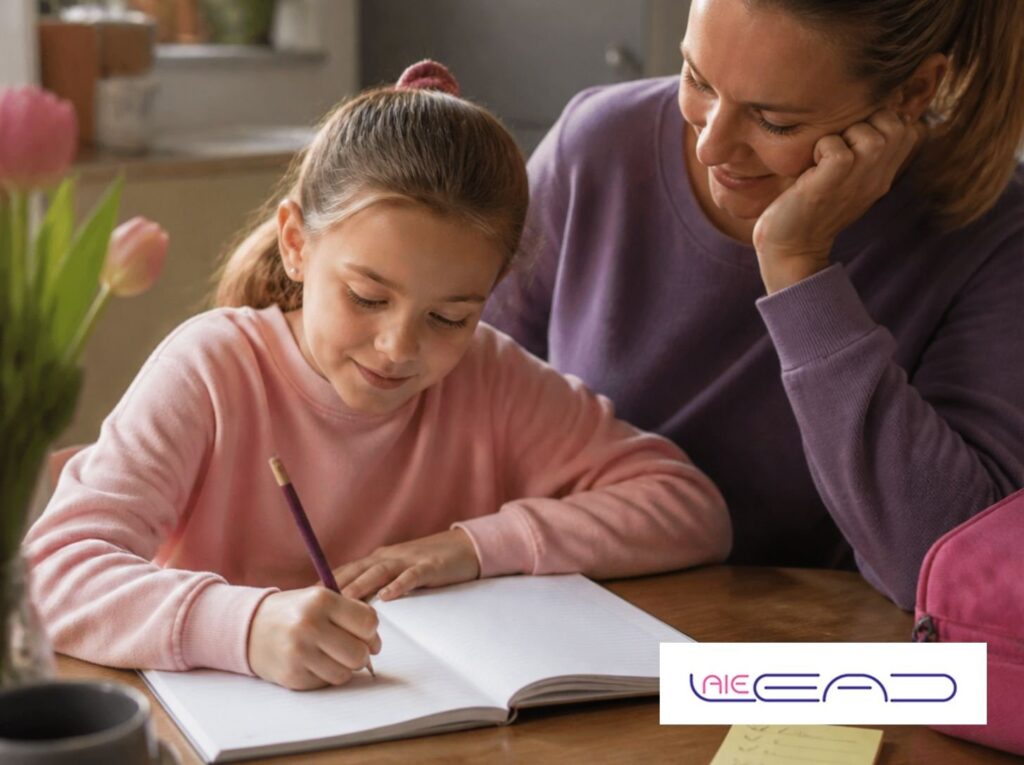
Maya is eight. She has had a snack, found her pencil and opened her homework book.
There are six questions on the page.
Her mother expects them to finish before dinner. But twenty minutes later, Maya has answered only one.
She asks for help with the next question. Then she needs reassurance that her answer is right. A few minutes later, she has lost her place.
“Come on, Maya. We did one just like this yesterday.”
“I know,” Maya whispers. “But can you stay?”
Her mother sits down again.
By the time the homework is finished, they are both exhausted. Maya feels disappointed in herself. Her mother wonders why something apparently simple has become so difficult.
- “Why does homework take hours?”
- “Why does my child always need help completing an assignment?”
Behind these questions is often a parent who cares deeply—and a child whose effort is not fully reflected on the page.
Why Homework Takes Hours—Even When a Child Understands the Lesson
Taking longer does not, by itself, mean a child has low ability, dislikes homework or lacks motivation.
A task that appears simple can involve several demands:
- Understanding the question.
- Remembering instructions while working.
- Choosing a strategy.
- Recording an answer.
- Checking the work.
- Moving on without reassurance.
A child may manage some of these comfortably and find others difficult.
Maya might know how to subtract but feel unsure whether subtraction is needed. Another child may explain an answer confidently yet struggle to write it down.
The useful question is: “Where does this child become stuck?”
For a child struggling at school, identifying that point can make support more specific and less frustrating.
When Your Child Can’t Follow Instructions
“Read the paragraph, underline the important information and answer the questions.”
An adult may hear one straightforward request. A child must remember several actions, carry them out in sequence and keep track of their progress.
Before assuming they were not listening, ask:
“Can you tell me what you need to do first?”
If your child cannot explain the task, clarify it. If they can explain it but lose track while working, try keeping the steps visible.
A short checklist can reduce the need to repeatedly ask, “What do I do now?”
Could working memory be involved?
Working memory helps us hold information in mind while using it.
Research from the MRC Cognition and Brain Sciences Unit describes how working memory difficulties can interfere with learning activities and highlights approaches to reducing overload.
Working memory problems in children are one possible influence, rather than a conclusion to draw from slow homework alone. Understanding, attention, fatigue and emotional wellbeing also need consideration.
“My Child Can’t Concentrate”—or Is Something Else Happening?
Maya looks out of the window. She sharpens her pencil again. She asks for a drink.
It is easy to see these actions as evidence that she does not want to work.
Sometimes children do need support with attention. At other times, they move away from a task because they are confused, tired or worried about getting it wrong.
To explore how to improve concentration in children, begin by looking at the conditions around the task:
- Is the instruction clear?
- Is the work appropriately challenging?
- Is the child hungry or exhausted?
- Are noise, interruptions or uncomfortable surroundings adding difficulty?
- Does the child know what a finished answer should look like?
A quiet workspace can help, but it cannot resolve a misunderstanding on its own.
The Emotional Cost of Homework Battles
Repeated struggles can gradually change how a child sees themselves.
- “Everyone else can do this.”
- “I always need help.”
- “I’m not good enough.”
Some children become quiet. Others argue, delay starting or push the work away.
Parents can feel trapped too. They want to encourage independence, but stepping back seems to leave their child stranded. Staying beside them can turn the evening into hours of supervision.
Over time, both may approach the homework book expecting another difficult experience.
Children need opportunities to experience learning as something they can participate in successfully.
That includes manageable challenge, encouragement and moments of discovery. These experiences can help nurture an interest in learning that extends beyond finishing tonight’s worksheet.
Six Ways to Help Your Child Get Started
1. Find the first point of difficulty
Observe one short task together.
Can your child explain the instruction? Choose a starting point? Continue after completing the first question?
“Needs help with homework” becomes more useful when it means “understands the calculation but cannot identify which information to use”.
Share that observation with the teacher.
2. Make the first action clear
“Finish this page” can feel overwhelming.
Try:
- “Read the first question.”
- “Underline what it asks you to find.”
- “Tell me what you might do first.”
Offer enough support to make the beginning manageable, then give your child an opportunity to act.
3. Explain how you make a decision
Instead of demonstrating only the answer, make your thinking visible:
“I am rereading the question because I need to know what we are finding.”
Then invite your child to make the next decision.
The Education Endowment Foundation recommends teaching strategies for planning, monitoring and evaluating learning, with practice embedded in subject work.
At home, this means helping children understand the process they can gradually learn to use themselves.
4. Reduce help gradually
Avoid suddenly withdrawing support from a child who relies on it.
You might say:
“We will read the instruction together. Then you can try the first part, and I will check in afterwards.”
Begin with something your child can realistically attempt. Increase their responsibility as you discover what helps.
5. Notice useful learning behaviours
Be specific:
- “You checked the instruction before asking.”
- “You explained which part confused you.”
- “You tried another approach.”
These observations help children recognise actions they can repeat. Independence includes knowing how to ask for useful help.
6. Agree reasonable expectations with school
Ask how long the homework should take and how much adult support is expected.
If it regularly takes much longer, record the time and help needed. Agree what to do when your child reaches a sensible stopping point.
The Education Endowment Foundation emphasises homework quality, connections with classroom learning and feedback. More time spent does not automatically mean more benefit.
Is Cognitive Skills Training an Alternative to Tutoring?
Some parents seek an alternative to tutoring because additional explanations and subject practice have not resolved the difficulty.
The appropriate support depends on what the child needs.
Tutoring can address missing knowledge and subject understanding. Cognitive skills development focuses on practising particular abilities involved in handling information. Some children may benefit from a combination of approaches, alongside support from school.
At AïeLEAD, we offer cognitive skills training for children through the Structure of Intellect programme, alongside learning support and confidence-focused conversations.
Targeted cognitive and perceptual exercises provide opportunities to practise selected skills, such as noticing relevant details, remembering information, recognising relationships and evaluating a response.
For Maya, we would begin by exploring her strengths, her difficulties and what greater independence would look like in everyday homework.
Progress in an exercise should be checked against progress in real learning tasks. It does not automatically establish improved school performance, confidence or motivation.
Our aim is to identify appropriate support and review meaningful changes individually.
A Calmer Beginning for Maya
Tomorrow, Maya’s mother begins differently.
“Show me what you understand first.”
Maya explains the question. Together, they identify the starting point and write down two steps.
Her mother stays nearby while Maya attempts the first part.
There may still be questions. The work may still take effort. But this time, they are discovering what allows Maya to do more for herself.
Her mother can acknowledge that progress:
“You worked out your first step. What will help you with the next one?”
Children deserve to discover that learning can be challenging and enjoyable—and that needing support does not make them less capable.
Learning Support in Twickenham and St Margaret’s
If homework takes hours or your child needs constant help, you do not have to work out the next step alone.
Speak with their teacher or SENCO about persistent difficulties, especially when confidence or progress is affected.
At AïeLEAD in St Margaret’s, Twickenham, Lara Khneisser brings more than twenty years of education experience to understanding the learner behind the results.
Visit www.aielead.com to discuss your child’s needs and explore whether cognitive skills development, teaching support or confidence coaching may be appropriate.
AïeLEAD | Learn • Experience • Achieve • Develop
Helping young people lead with intention.
 |
About the author Lara Khneisser is the founder of AïeLEAD. She has more than 20 years in education as a teacher, coordinator and school principal, a background in Biology and Biochemistry, and is a certified Structure of Intellect Learning Specialist and NGNLP practitioner. Learn more about AïeLEAD. |
References and Further Reading
- Education Endowment Foundation. Metacognition and Self-Regulated Learning. Second edition, 2025.
- Education Endowment Foundation. Homework. Teaching and Learning Toolkit.
- MRC Cognition and Brain Sciences Unit, University of Cambridge. Understanding how working memory problems impair classroom learning.
Editorial note: Maya is a fictional character illustrating possible learning experiences. Her story is not a diagnosis or a documented programme outcome.