
By Lara Khneisser, founder of AïeLEAD · Faith & meaning · 5-minute read
When life feels busy, uncertain or hard, children look to us to show them where to find calm. Praying together as a family is one of the gentlest ways to do that. It gives children a quiet moment to slow down, share what is on their hearts and remember that they are deeply loved.
The short answer
Faith gives children something that grades, screens and busy timetables cannot: a sense that they belong, that their life has purpose, and that they are loved for who they are, not for what they achieve. A few minutes of family prayer each day can help children feel calmer, more secure and more connected to the people around them.
Why faith and meaning matter for children
Children ask big questions from a very young age. Why do bad things happen? Does God hear me? What am I here for? These questions are not a problem to be solved quickly. They are an invitation to talk, to listen and to grow together.
When children have a safe space to explore these questions, they often find it easier to cope with worry, disappointment and change. Faith offers them a language for hope, gratitude and forgiveness, and a steady foundation to return to when life feels uncertain.
“Children do not need perfect answers. They need to know that their questions are welcome, and that they are never alone.”
The gift of praying together
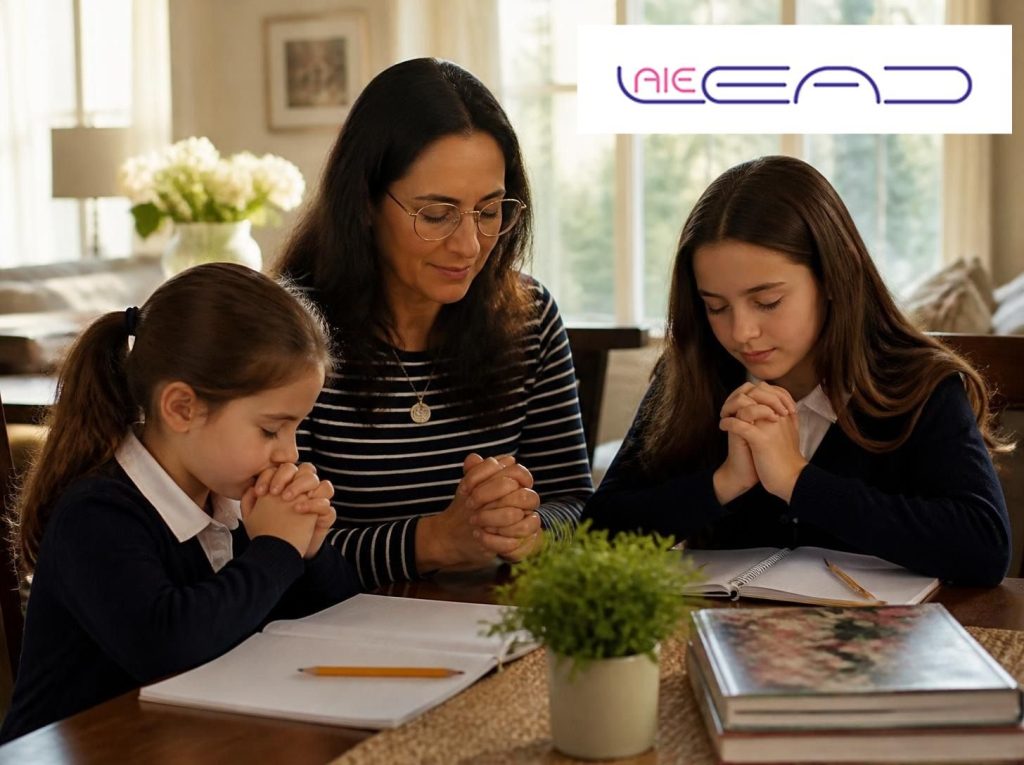
Prayer does not need to be long or formal to be meaningful. For many families, the most precious moments are simple ones: a few words of thanks before a meal, a quiet prayer at bedtime, or holding hands at the table before a big day at school.
Praying together helps children:
- Feel calmer. Pausing to pray slows breathing and thoughts, which can ease worry before tests or difficult days.
- Express their feelings. Prayer gives children words for joy, fear, sadness and hope.
- Build connection. Sharing a quiet moment strengthens the bond between parent and child.
- Grow in gratitude. Noticing blessings each day helps children see the good in their lives.
- Know they are loved. Above all, prayer reminds children that God’s love does not depend on their achievements.
Five simple ways to bring faith into everyday family life
1. Start small and keep it simple
Choose one regular moment, such as breakfast or bedtime, and pray together for just a minute or two. Consistency matters more than length.
2. Let children lead sometimes
Invite your child to say the prayer, or to share one thing they are thankful for and one thing they would like to pray about. You may be surprised by what is on their mind.
3. Read a short passage of Scripture together
A few verses read slowly, followed by a simple question such as “What do you think this means for us today?”, can open beautiful conversations.
4. Talk honestly about difficult things
When children face suffering, loss or unfairness, it is fine to say “I don’t fully understand either.” Praying together through hard moments shows them that faith is a place to bring every feeling.
5. Practise forgiveness at home
Saying sorry, forgiving one another and praying for people we find difficult helps children understand grace in a very real, everyday way.
When your child has big questions
Older children and teenagers may begin to question what they believe. This is a natural and healthy part of growing up. Rather than worrying, try to stay curious and open. Listen first, share your own experience honestly, and let them know that doubt and faith can sit side by side.
Sometimes young people find it easier to talk through these questions with a trusted adult outside the family. That is exactly why we created our Faith & meaning sessions: honest, gentle conversations about prayer, suffering, forgiveness, purpose, Scripture and recognising God’s love when life feels difficult, without pressure and at your child’s own pace.
Faith, wellbeing and learning go together
At AïeLEAD we believe in supporting the whole child. A young person who feels secure, valued and at peace is better able to focus, learn and grow. That is why our faith-based support sits alongside our emotional and mental wellbeing coaching, NLP coaching and SOI cognitive skills programmes. You may also enjoy our articles on the power of gratitude and unconditional love.
Would you like support for your child?
If your child is asking big questions about faith, or you would like to bring more meaning and calm into family life, we would love to talk with you.
Frequently asked questions
How can I start praying with my child?
Choose one regular time each day, such as bedtime or a meal, keep it short, and invite your child to share something they are thankful for and something they would like to pray about.
What age can children start praying?
Children can begin at any age. Toddlers can join in a simple thank-you prayer, while older children and teens can lead prayers, read Scripture and talk about what faith means to them.
What should I do if my teenager questions their faith?
Stay calm, listen with curiosity and share your own experience honestly. Questions are a normal part of growing up, and a trusted conversation, at home or with a supportive mentor, can help.
Can faith help children with worry and stress?
Many families find that prayer and faith give children a sense of calm, security and hope. Faith-based support is not a replacement for medical or psychological care, but it can be a gentle source of comfort alongside it.
 |
About the author Lara Khneisser is the founder of AïeLEAD. She has more than 20 years in education as a teacher, coordinator and school principal, and supports young people’s learning, confidence and personal growth. Learn more about AïeLEAD. |